
September 22, 2026
European Court of Human Rights holds hearing in case of ten Ukrainian children from Crimean childcare institutions whose whereabouts have been unknown since 2014
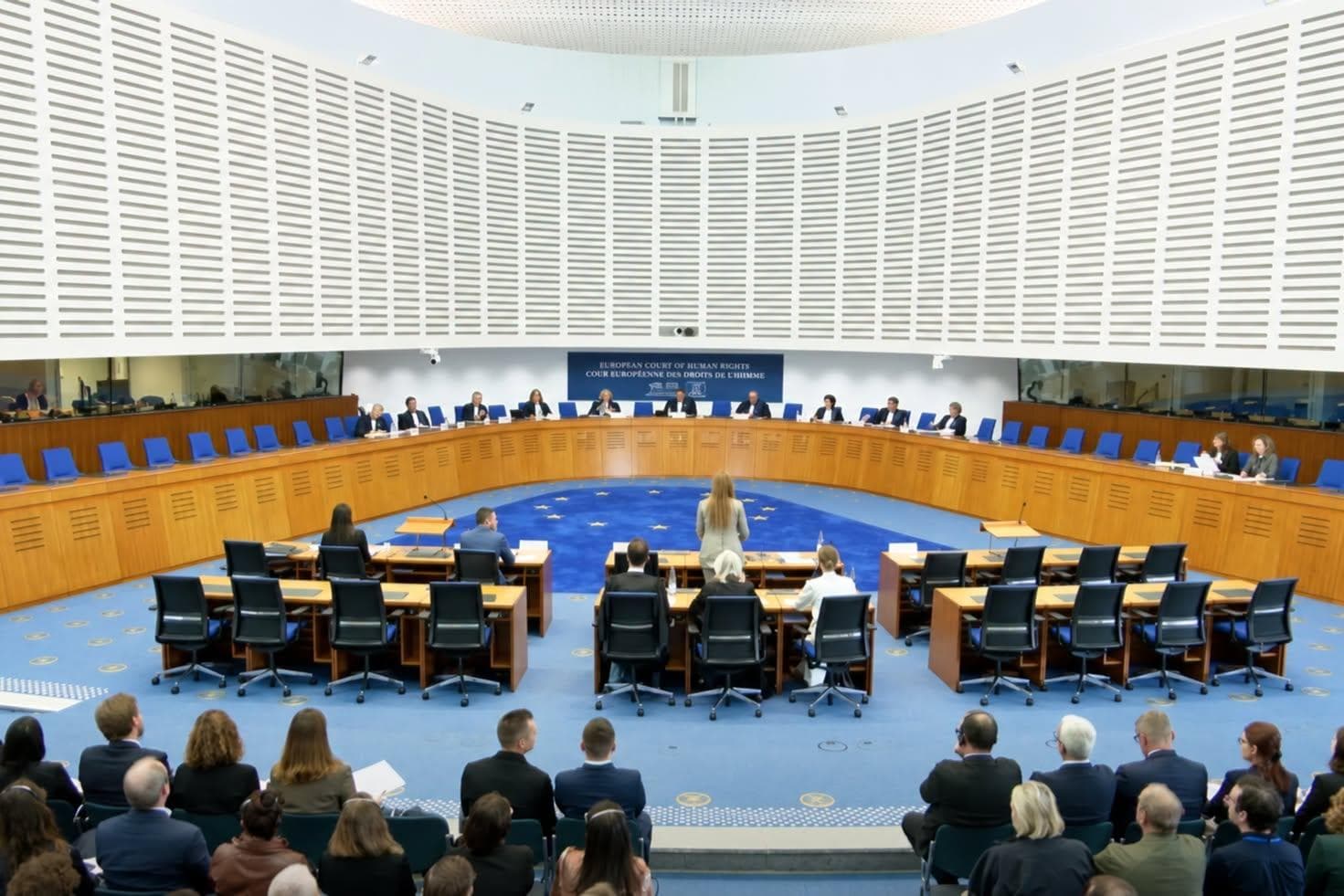
Strasbourg, 22 September 2026. The European Court of Human Rights held a hearing in the case of Ukrainian Helsinki Human Rights Union on behalf of ten Ukrainian children v. Russia (application no. 6719/23). The case concerns ten children deprived of parental care. At the start of the occupation of Crimea in 2014, they were living in childcare institutions in the care of the Ukrainian State. Since then, despite repeated requests from the Ukrainian authorities, there has been no information on their whereabouts. The International Bar Association’s Human Rights Institute (IBAHRI) has intervened in the case as an independent third party.
What the case is about
The application was lodged with the Court in January 2023 by the Ukrainian Helsinki Human Rights Union (UHHRU), acting on the children’s behalf. The children were born between 2009 and 2013 and are Ukrainian nationals by birth. The Court granted the case priority.
According to UHHRU, after Russia took control of Crimea, over 4,000 children deprived of parental care were automatically declared Russian citizens. Despite the Ukrainian Government’s requests, Russia refused to transfer the children to the Ukrainian authorities and initiated adoption procedures. The applicant alleges that Russian nationality was imposed on the ten children in this case and that they were included in the Russian adoption and foster placement systems. Some of them may already have been adopted. UHHRU argues that, taken together, this amounts to the children’s enforced disappearance.
The Court decided to hold a hearing in this case, departing for its usual practice for similar cases, citing its exceptional gravity and public importance. The hearing covered both the admissibility and the merits of the case. In other words, the Court must determine whether it can examine the complaint and, if so, whether the children’s rights were violated. The Court will rule at a later date, after examining the oral and written submissions. The Russian government, despite having received all the relevant documentation and evidence in support of the case, has not submitted any observations to counter the allegations and it didn’t take part in the hearing.
For Bring Kids Back UA, behind the legal language of the complaint are ten individual children. The Court does not disclose their names, having granted the case anonymity and confidentiality.
“When Russia occupied Crimea, these children were between one and five years old. The Ukrainian State was their guardian, and ever since it has been unable to get an answer to a simple question: where are they? Today they are teenagers who may be living under a citizenship that is not their own, in families that are not their own. Justice for them is not only about punishing those responsible. It is the right of every child and their loved ones to know the truth: where the child is, who they are with, and who decided that they are no longer Ukrainian. That is what makes this case so fundamentally important,” said Maksym Maksymov, Head of Bring Kids Back UA.
Role of IBAHRI
The third-party interveners in the case are the Government of Ukraine and seven Ukrainian and international organizations, including IBAHRI. A third-party intervener is not a party to the dispute: it submits its own material and arguments to assist the Court in examining the case. IBAHRI was represented in the proceedings by its Director and Co-Chair of the Bring Kids Back UA Task Force, Baroness Helena Kennedy LT KC, and Programme Lawyer Eleonora Scala.
In its third-party intervention, IBAHRI addresses two issues.
The first is the Court’s approach to NGO representation in circumstances where obtaining the explicit consent of child victims is impossible. IBAHRI argues that the children’s vulnerability, the context of occupation and armed conflict and the nature of the alleged violations must be taken into account when assessing questions of legal standing and representation, that is, who may bring a case before the Court on the children’s behalf, and on what basis.
The second is the assessment of the alleged violation of Article 8 of the Convention, concerning the right to identity. IBAHRI urges the Court to consider the broader context of Russia’s systematic policy towards Ukrainian children and to ensure that the full scale and impact of those actions are reflected in its analysis.
“This case is about far more than ten children. It stands for thousands of Ukrainian children whose whereabouts remain unknown and whose identities, family ties and futures have been systematically destroyed. The Court has an opportunity to make clear that these children are not collateral damage of war, but victims of a systematic policy that demands accountability,” said Baroness Helena Kennedy, Director of IBAHRI.
Ukraine’s position
The Government of Ukraine is taking part in the case as a third-party intervener. The Ministry of Justice delegation at the hearing was led by Marharyta Sokorenko, Government Agent of Ukraine before the European Court of Human Rights. She linked the circumstances of the case to the inter-State cases Ukraine v. Russia (re Crimea) and Ukraine and the Netherlands v. Russia. She also stressed the particular vulnerability of children who are under the complete control of the Russian authorities and cannot defend their rights on their own. Ukraine calls on the Court to find Russia responsible for violating these children’s rights and to require it to cooperate with Ukraine and the international community.
“Russia must provide information on the fate of the Ukrainian children who have ended up under its control and ensure their return. The case of the ten children from Crimea reflects a much wider problem — systemic violations of the rights of Ukrainian children in the occupied territories that have continued since 2014. The forced imposition of Russian citizenship has become a tool for further violations of their rights. Ukraine insists that these actions, and Russia’s refusal to cooperate with the Court, must receive a proper legal assessment,” said Marharyta Sokorenko, representative of the Ministry of Justice of Ukraine.
A recording of the hearing is be available on the Court’s website.