
October 3, 2026
Prosecutor General’s Office and Law Enforcement Agencies Strengthen Cooperation with NGOs in Documenting Crimes Against Deported Children
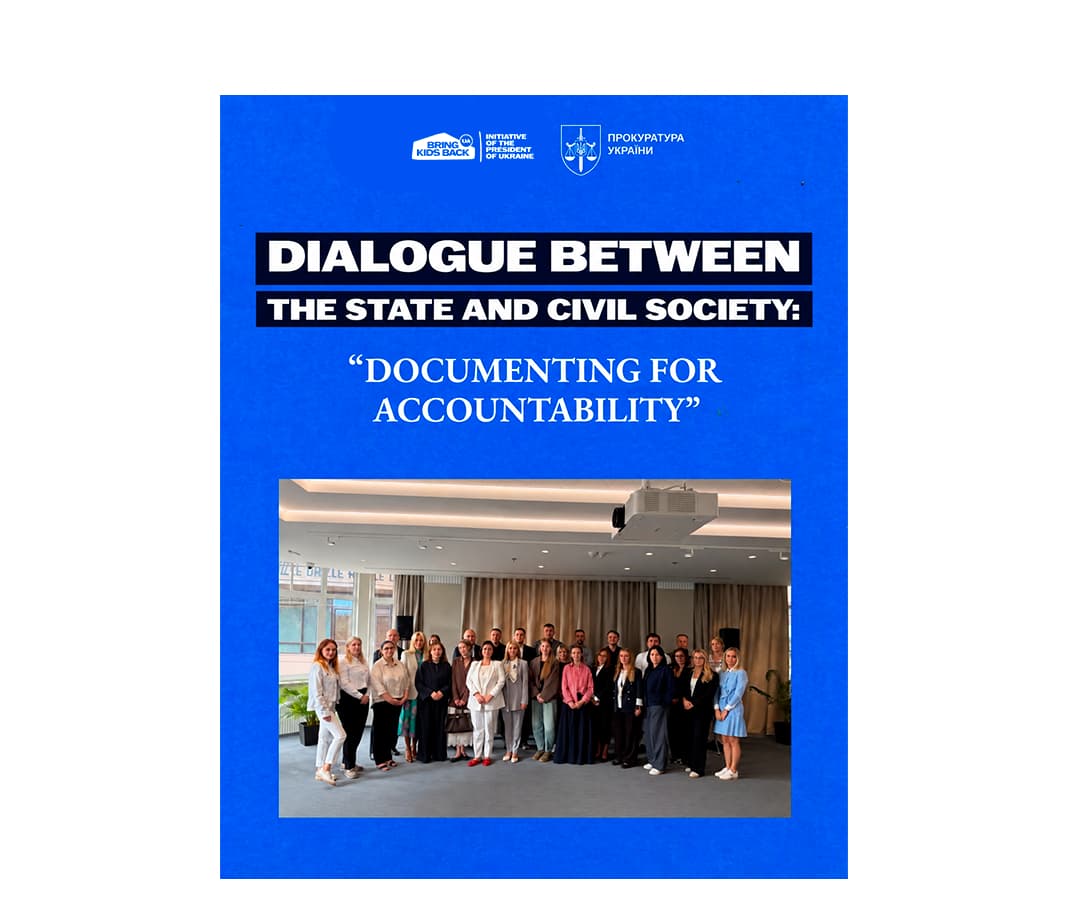
On 27 August 2026, the Bring Kids Back UA Initiative of the President of Ukraine, together with the Prosecutor General’s Office, held a closed strategic meeting, “Dialogue Between the State and Civil Society: Documenting for Accountability.” Participants discussed priorities for documenting crimes related to the deportation, forcible transfer, militarisation and indoctrination of Ukrainian children.
The meeting brought together representatives of government authorities and non-governmental organisations, including the Prosecutor General’s Office, the Main Investigation Department of the National Police of Ukraine, the Main Investigation Department of the Security Service of Ukraine, the Secretariat of the Ukrainian Parliament Commissioner for Human Rights, the Coordination Centre for Family Upbringing and Child Care Development, Bring Kids Back UA, Voices of Children Charity Foundation, East SOS Charity Foundation, Almenda Centre for Civic Education and Human Rights, the Partnership for a Strong Ukraine Fund, the Council of Europe Office in Ukraine, the Regional Center for Human Rights, the ZMINA Human Rights Centre, Save Ukraine, The Reckoning Project, Global Rights Compliance, IDLO Ukraine and the EU Advisory Mission in Ukraine (EUAM Ukraine).
“Ukraine has already established an ecosystem for documenting crimes related to the deportation, forcible transfer, militarisation and indoctrination of Ukrainian children. It is important for us that the work of organisations documenting these crimes is useful for investigations, helps build the evidence base and brings accountability closer. Bring Kids Back UA can serve as a coordination point in this cooperation, facilitate the exchange of data and materials when necessary, and engage the required expertise,” said Maksym Maksymov, Head of Bring Kids Back UA.
Deputy Prosecutor General Viktor Logachov reported that the Prosecutor General’s Office had initiated criminal proceedings concerning a crime against humanity committed against Ukrainian children. According to him, the scale of the violations requires even greater coordination in investigations.
“Russia systematically conceals the traces of its crimes: it changes children’s documents, their first and last names, carries out forced passportisation and arranges illegal adoptions. This requires all of us to adopt new approaches to collecting, analysing and using information. We must take the next step — move from parallel efforts to a single, coordinated system for documenting international crimes. We need common documentation standards, timely information sharing, aligned priorities and coordinated efforts,” Viktor Logachov said.
He also stressed that data collected by civil society organisations is already helping criminal investigations, the identification and verification of children’s data in official registries, as well as state efforts to secure their return.
The meeting was structured around three sessions: presentation of law enforcement agencies’ strategic priorities in documenting crimes and developing the evidence base; current initiatives, methodologies and analytical tools of civil society and international partners; and a moderated discussion on synchronising priority areas for documentation.