
September 29, 2026
Testimonies of Ukrainians who experienced occupation and captivity, heard during the international conference Pathways to Peace
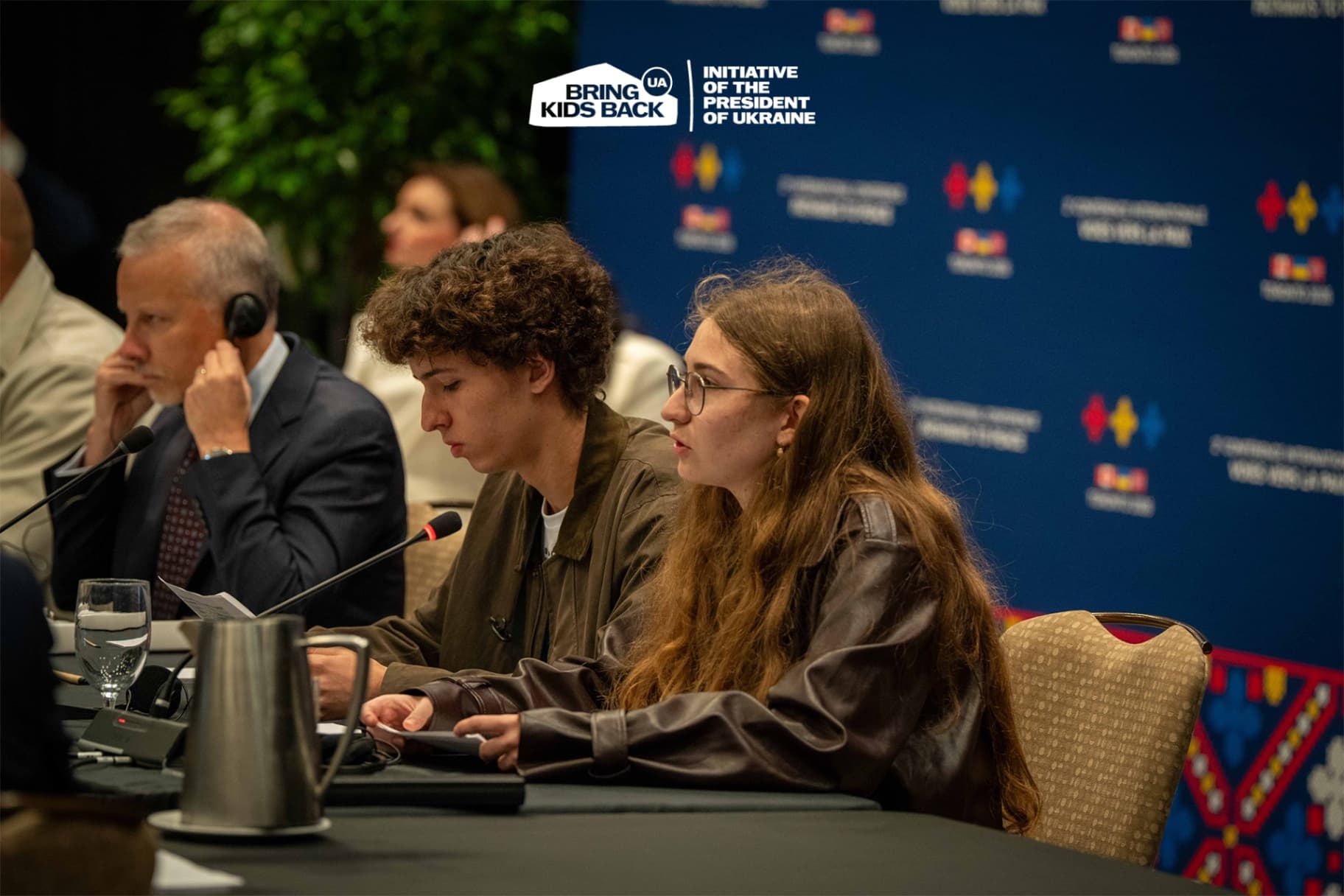
Yesterday, 83 delegations, representing 72 states and 11 international organizations, arrived in Toronto for Pathways to Peace: Second International Conference on Returning Ukrainian Children, Detained Civilians and Prisoners of War. Delegates heard testimonies from Ukrainians who survived occupation and captivity, as well as national statements by states and international organizations.
Daria and Matvii, aged 18 and 19, grew up in occupied Crimea and now live in government-controlled Ukraine. Daria described a Russian school where any mention of Crimea being Ukrainian was banned. Pupils were shown films portraying Ukrainians as Nazis, made to write thank-you letters to Russian soldiers and to draw the letter Z, the symbol Russia uses to mark its war against Ukraine.
“We didn’t understand at that time that we were being prepared for a real war. From the age of 10, girls were learning medical support and boys were being taught how to handle weapons. We were being trained to be Russian soldiers. <…> Nobody physically kidnapped me, just like tens of thousands of Ukrainian children who remain in the occupied territories. But they stole the main thing I had: my identity, my country, my rights, my future,” said Daria.
Matvii is from Yevpatoria and was six years old when Russia occupied Crimea. He spoke about the cadet classes that Russia is opening en masse in Crimea and other occupied territories to prepare children for military service. A soldier fresh from the front line came to his school and told pupils that a “real man” would also go and kill Ukrainians at 18. To avoid conscription, Matvii enrolled at a university in Moscow, where he was still studying six months ago. He obtained his travel documents in Belarus, and at every stage he could have been detained and drafted into the army.
Daria and Matvii met at the Save Ukraine center. “When we met, we fell in love, and we are married. It’s been three weeks since our wedding,” Daria said. She now studies psychology to help children who have lived through the war.
Yulian, a Marine and defender of Mariupol, spent two and a half years in Russian captivity and was held in several prisons in the occupied territories and in Russia. He described a system of detention for Ukrainian prisoners of war and civilians built on pain, fear and starvation. He said that at least a quarter of the people he met in these prisons were civilians, and that he knows no one who has ever seen representatives of international organizations there. “Get my boys home. Get all Ukrainian POWs, civilians and children home,” Yulian urged.
Margarita Shabanova spoke about her husband, Dmytro Shabanov, a staff member of the OSCE Special Monitoring Mission. He was unlawfully detained in April 2022 in occupied Luhansk while performing his official duties. An unrecognized “court” sentenced Dmytro and his colleague Maxim Petrov to 13 years, and Vadym Golda to 14 years. Dmytro and Maxim were later moved to penal colonies in Siberia. By the day of the conference, Dmytro had spent 1,627 days in detention. Margarita urged delegations to speak the names of all three and not to stop until they are free. “I came to Toronto for your voice and for your action. I hope I can count on both,” she said.